
Why Your 4x4 Overheats While Off-Roading and the Cooling Upgrades That Fix It
Learn what causes engine overheating in desert driving, which off-road cooling upgrades work and when your 4x4 may need a radiator upgrade in Dubai.
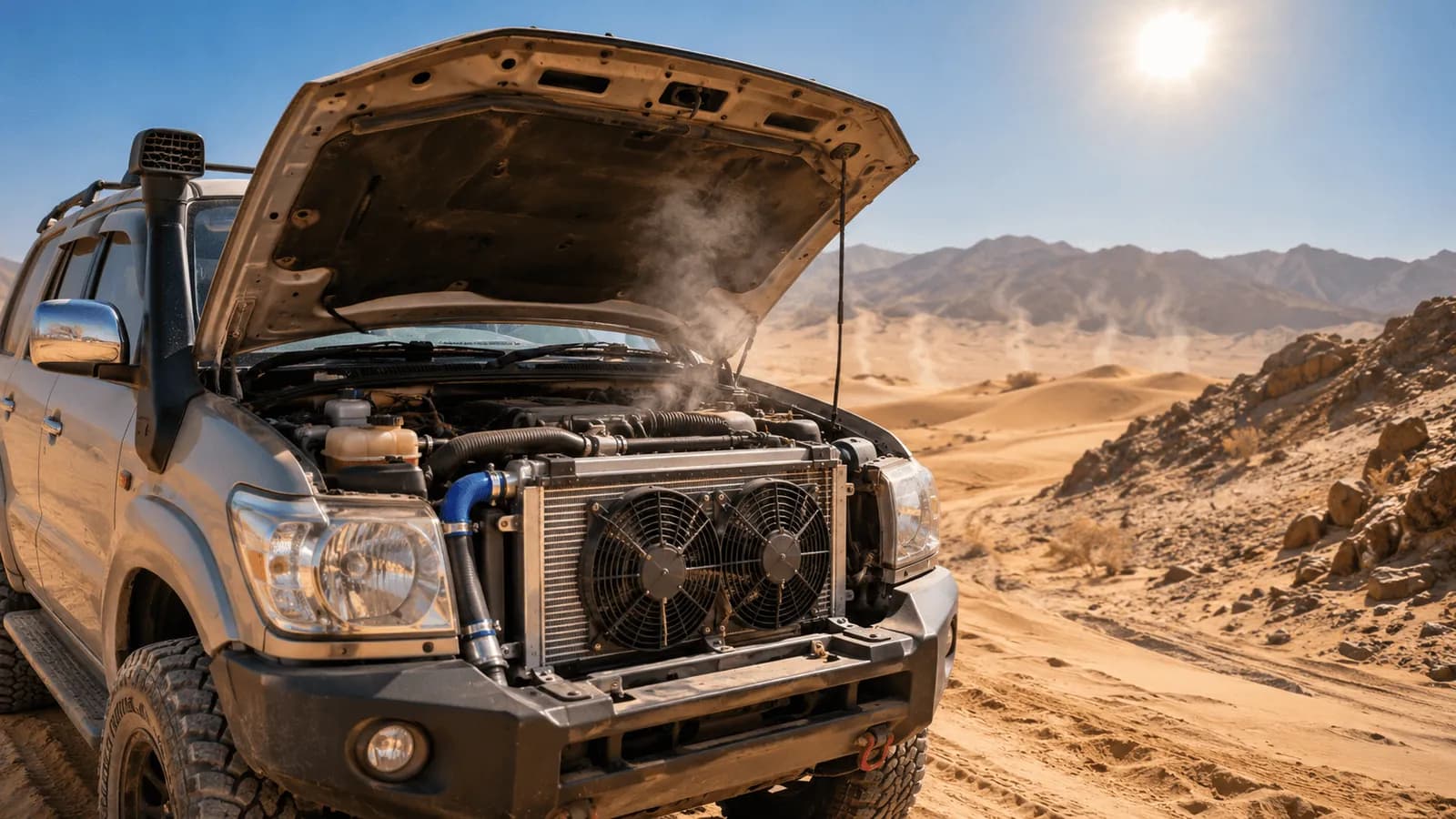
A 4x4 can drive normally through Dubai traffic all week and still push its temperature gauge upward within minutes of entering soft sand. That does not mean the desert is simply “too hot” for the vehicle. It usually means the cooling system has reached the limit of what it can manage under off-road load.
During dune driving, the engine works harder while the vehicle moves slowly. Tyres create more resistance, the transmission changes load frequently, and the radiator receives less natural airflow than it would at highway speed. Add sand, high ambient temperature, a heavy bumper or an older cooling system, and 4x4 overheating off road becomes much more likely.
The right solution begins with diagnosis. Upgrading parts without finding the actual restriction can add expense while leaving the real problem untouched.
Why Engine Overheating in Desert Conditions Happens
An engine creates more heat whenever it works harder. In soft sand, the vehicle needs continuous power to maintain momentum. At the same time, low road speed means less air passes naturally through the grille, condenser and radiator.
The cooling fan must compensate. If its clutch is weak, the electric fan is slow, the shroud is damaged or the radiator face is blocked, heat can build quickly. The air-conditioning condenser also releases heat in front of the radiator, increasing the demand on the system.
Common causes of engine overheating in desert driving include:
- Low coolant or an incorrect coolant mixture
- Ageing coolant that has lost protective performance
- Sand, dust, insects or debris trapped between heat exchangers
- A partially blocked or internally restricted radiator
- Weak fan clutch, faulty electric fan or damaged fan shroud
- Thermostat, water-pump or pressure-cap problems
- Engine oil or transmission fluid running excessively hot
- Oversized tyres, extra weight or incorrect gearing increasing load
- A steel bumper, winch plate, lights or mesh restricting cooling airflow
- Existing mechanical faults that appear only under sustained demand
Manufacturer guidance commonly treats high coolant temperature, reduced power and warning messages as conditions requiring immediate attention. Repeated overheating should never be dismissed as normal desert behaviour.
Diagnose Before Buying Off-Road Cooling Upgrades
A workshop should reproduce or investigate the conditions that cause the temperature rise instead of immediately recommending a larger radiator.
A proper inspection may include:
- 1Checking coolant level, condition and concentration when the engine is cold
- 2Pressure-testing the system for leaks
- 3Testing the radiator cap and thermostat operation
- 4Inspecting the water pump and coolant circulation
- 5Confirming fan-clutch engagement or electric-fan performance
- 6Reading live coolant, intake-air, engine-oil and transmission temperatures
- 7Reviewing tyre size, gearing, vehicle weight and recent modifications
- 8Inspecting bumpers, lights and winch installations for airflow restriction
This is where a search for a Maintenance check near me should lead: not to a generic fluid top-up, but to a workshop that understands 4x4 load, cooling airflow and UAE desert use.
Off-Road Cooling Upgrades That Actually Help
Not every vehicle needs every upgrade. The strongest solution is the one that addresses the measured weakness.
1. Restore the Standard Cooling System First
Before modifying the vehicle, return the original system to full health. Clean the cooling stack correctly, replace damaged shrouds, repair leaks and renew worn caps, thermostats, pumps or fans. Use the coolant specification and service procedure recommended for the vehicle.
A healthy factory system is often more capable than owners realise. Upgrades should support it, not hide neglected maintenance.
2. Improve Fan and Shroud Performance
At low speed, the fan does most of the airflow work. A weak viscous fan clutch may appear normal in the workshop but fail to pull enough air when the engine is hot. Electric fans also need correct relays, wiring, control signals and blade direction.
The fan shroud is equally important because it helps pull air across the full radiator core. Removing it or using a poorly fitted aftermarket version can reduce cooling efficiency.
3. Consider a 4x4 Radiator Upgrade
A 4x4 radiator upgrade may be justified when the original radiator is undersized for a genuinely modified build, internally restricted or repeatedly reaching its thermal limit despite the rest of the system testing correctly.
Core design, tube size, fin density, material, sealing and airflow matter more than simply advertising “more rows.” A thicker radiator can even perform poorly if air cannot pass through it or if the fan and shroud are not matched to the new core.
Choose a vehicle-specific radiator from a traceable manufacturer. Installation should preserve proper clearances, hose routing, mounting isolation and cap pressure.
4. Rework Airflow and Support Fluid Cooling
Sometimes the best off-road cooling upgrades do not involve a new radiator. Moving a number plate, winch control box or auxiliary lights can reopen the grille. If live data shows excessive transmission or engine-oil temperature, a properly sized auxiliary cooler may also help.
Car Space can help owners review how exterior accessories interact with cooling, suspension, sensors and overall vehicle weight. This matters because a reliable build should work as one system.
What to Do If Your 4x4 Starts Overheating
If the temperature warning appears or the vehicle loses power, reduce load and stop in a safe place as soon as conditions allow. Switch off accessories that add heat, including the air conditioning, and follow the procedure in the vehicle’s owner manual.
Never open a pressurised coolant cap while the engine is hot. Hot coolant and steam can cause serious burns. Do not pour cold water into an overheated engine unless the manufacturer’s emergency procedure specifically allows it.
Once the vehicle has cooled, check for obvious leaks, damaged hoses or low coolant only if it is safe to do so. Repeated warnings, coolant loss, knocking or continued high temperature require professional recovery and inspection.
Choose Off-Road Parts Dubai Builds Can Depend On
The best Off-road parts Dubai drivers can buy are matched to the exact model, final weight, tyre setup and terrain. A bumper must preserve cooling airflow; a radiator must work with the fan and shroud; and any cooler needs secure lines and professional installation.
Car Space helps owners plan complete UAE off-road builds rather than buy isolated parts. Its exterior accessories range includes bumpers, protection and styling upgrades, with fitment guidance that considers weight, sensors, durability and vehicle use.
Before the next desert trip, check coolant, hoses, belts, fans and fluid levels. Inspect the cooling stack for debris after difficult drives and investigate any rising temperature trend early. 4x4 overheating off road is a warning, not a normal part of desert driving.________________________________________________________________________
Frequently Asked Questions
Why does my 4x4 overheat only when driving off road?
What are the best off-road cooling upgrades for desert driving?
When does a vehicle need a 4x4 radiator upgrade?
Can a bull bar or front bumper cause engine overheating in desert driving?
Where can I find a maintenance check near me for an overheating 4x4?
Need Help?
Talk to a Car Space Expert
Get personalised advice on buying, selling, inspecting or building your car in the UAE.
Book a Free ConsultationCar Space Services
More Articles
Baja Designs Squadron Lights in the UAE: Are They Worth It?
11 min read · Off-Road
Off Road Accessories Dubai: Building a Reliable 4x4 for UAE Terrain
11 min read · Off-Road
Car Wrap Cost Dubai: Full 2026 Pricing Breakdown
9 min read · Car Upgrades
Best Car Accessories Dubai Drivers Should Consider in 2026
9 min read · Car Parts