
Why Your Lift Kit Ruined the Ride and How to Set It Up Right
Fix poor lift kit ride quality by matching springs, shocks, load and geometry. Learn what a proper suspension lift setup needs in Dubai.
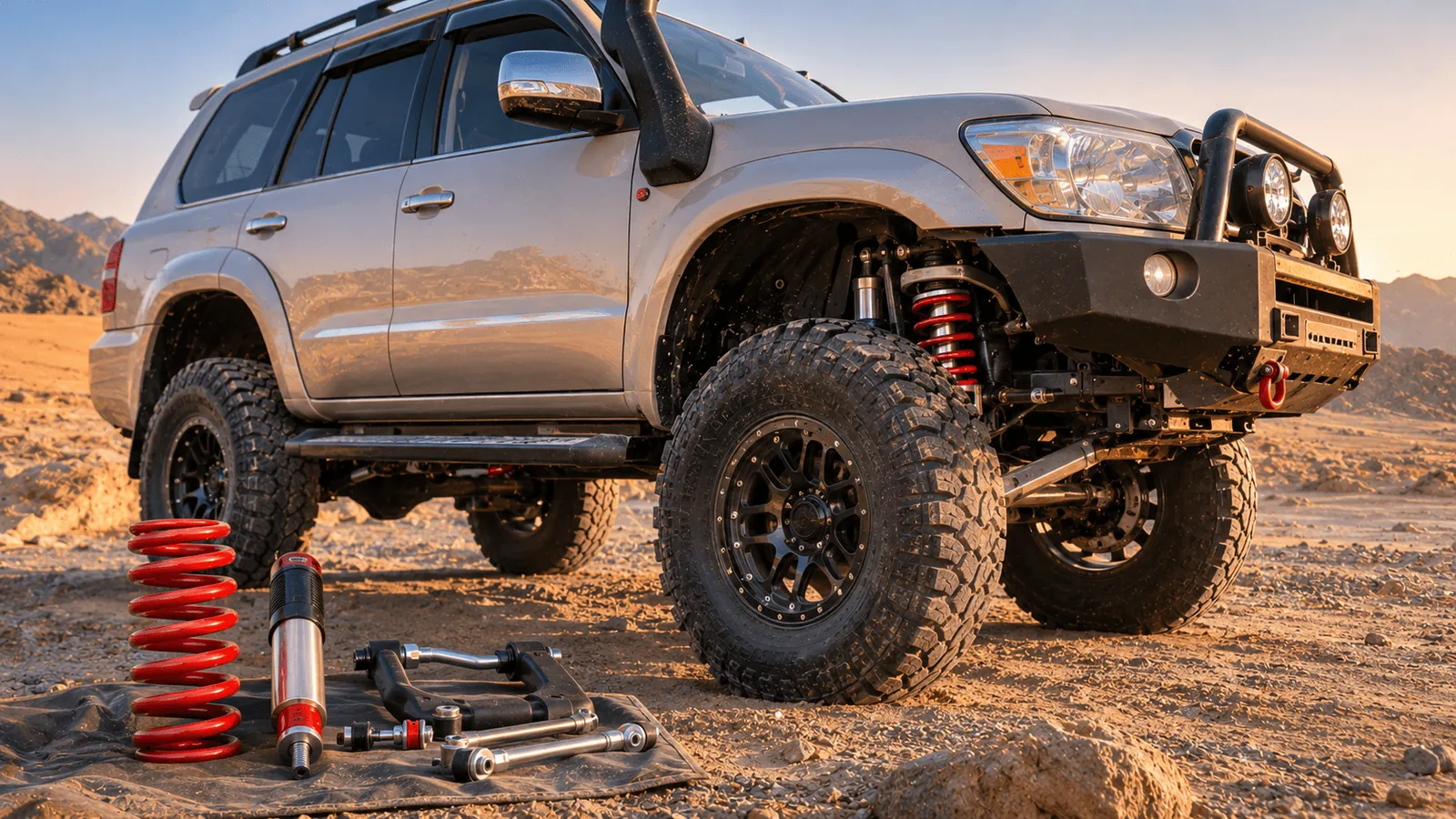
Your 4x4 looked better the moment it left the workshop. Then the first drive revealed the trade-off: every road joint felt sharper, the steering stopped returning naturally, the rear bounced when empty or the vehicle floated after a bump. Poor lift kit ride quality is common, but height itself is rarely the only cause.
A suspension system has to control the vehicle’s weight while keeping the tyres in contact with the road or terrain. Changing springs, spacers or shock lengths alters how that system moves. If the components are selected only by lift height, the result may look right while driving badly.
The solution is not necessarily to remove the lift. It is to identify what was mismatched and rebuild the setup around vehicle weight, driving use, suspension travel and geometry.
Why a Lift Changes More Than Vehicle Height
Raising a 4x4 changes the resting position of its suspension. Depending on the design and amount of lift, it may also alter control-arm angles, caster, camber, toe, driveshaft angles and available droop. The centre of gravity moves higher, while larger tyres add weight for the suspension to control.
A proper suspension lift setup therefore considers the complete vehicle not just springs that produce a particular measurement.
1. The Springs Are Too Heavy for the Actual Load
One of the most common causes of a harsh ride is fitting constant-load springs for weight the vehicle does not carry. Heavy-duty coils designed for a steel bumper, winch, drawers, long-range tank and camping load may feel stiff on an otherwise standard daily driver.
Spring rate and load capacity are related but not identical to lift height. Two springs may provide a similar lift while being intended for very different vehicle weights. Choosing the stronger option “just in case” can reduce comfort and usable movement when the vehicle is lightly loaded.
The opposite mismatch causes problems too. Soft springs under a permanently heavy build can sag, bottom out and rely excessively on the bump stops.
Before selecting springs, record all permanent accessories and regular cargo, including bumpers, winches, protection, racks, drawers and spare-wheel carriers. Occasional holiday luggage should not dictate the harshest everyday spring.
2. The Shocks Do Not Match the Springs
Springs support weight and allow movement; shock absorbers control the speed of that movement. A strong spring paired with unsuitable damping may produce repeated bouncing. Excessive compression damping can make small bumps feel sharp, while insufficient rebound control can allow the body to continue moving after the bump has passed.
Shock length also matters. A short unit may top out at droop; an unsuitable long unit may bottom internally before the suspension reaches its bump stop. Vehicle-specific shocks are preferable because their valving and travel are developed around a known platform and lift range.
3. A Spacer Levelled the Stance but Not the System
A levelling kit normally raises the front to reduce the factory rake. It may use a strut spacer, spring spacer, replacement spring or an adjustable shock assembly. These approaches do not produce identical results.
The effect on leveling kit ride quality depends on whether the kit changes preload, travel or damper behaviour. A spacer may preserve much of the original spring feel but can still limit droop on some designs. Excessive front lift may also make alignment harder to correct.
There is no universal best leveling kit for ride quality. The better choice is a vehicle-specific system that achieves a moderate height, retains adequate travel, works with suitable dampers and allows alignment within specification. The correct answer depends on the model, front accessory weight, tyre size and how the vehicle is used.
4. The Alignment Numbers Are Wrong
A vehicle can be “aligned” while still driving poorly. Toe may be within range, yet caster can remain too low after the lift. Low caster commonly contributes to vague straight-line stability, weak steering return and frequent corrections at highway speed.
Some vehicles can recover geometry through factory adjustment. Others need application-specific control arms, bushes, brackets or approved correction parts to restore operating angles.
Ask for a printed before-and-after alignment report. The technician should assess the numbers against the lifted application rather than simply turning off the warning display on the alignment machine.
5. Bush Preload, Tyres and Pressure
Rubber suspension bushes may remain twisted if pivot bolts are finally tightened while the wheels hang instead of at the position specified by the manufacturer. This preload can resist movement, create harshness and shorten bushing life.
The suspension may not be the only new component. Larger all-terrain tyres, stronger light-truck construction and heavier wheels can noticeably change ride comfort. Excessive road pressure makes that difference more obvious.
Do not copy pressure from another 4x4 or use the sidewall maximum as a daily target. Begin with the vehicle and tyre guidance, then adjust for load, tyre size and use. Check wheel offset and clearance as well, because rubbing can be mistaken for a suspension fault.
How to Diagnose Poor Lift Kit Ride Quality
Start by describing the symptom precisely rather than saying the ride is “bad”:
- Sharp over small joints: check tyre pressure, bush preload and compression damping.
- Repeated bouncing: inspect shock control and spring compatibility.
- Rear harsh when empty: confirm whether constant-load springs exceed the regular load.
- Steering wanders: review caster, toe, tyres and steering components.
- Hard knock at full extension: check shock length and top-out.
- Bottoming over larger bumps: assess spring rate, bump stops, load and compression travel.
- Vibration after lifting: inspect driveline angles, wheel balance and related components.
Measure the vehicle on level ground from consistent hub or chassis points. Record front and rear heights, tyre pressures and normal load so the workshop has evidence rather than impressions alone.
What a Correct Suspension Lift Setup Includes
A well-planned suspension lift setup should cover:
- 1Vehicle model, year, engine and suspension type
- 2Current and planned permanent accessory weight
- 3Daily driving, desert, rock, touring or towing use
- 4Springs matched to the regular load
- 5Dampers matched to the springs and lift range
- 6Sufficient compression and droop travel
- 7Appropriate bump-stop and brake-line clearance
- 8Geometry correction where the application requires it
- 9Wheel alignment and steering-centre calibration
- 10Inspection and re-torque after the initial settling period
Modern vehicles may also require headlamp or driver-assistance checks after ride-height changes. Follow the manufacturers’ instructions.
Lift Kit Installation in Dubai: What to Ask the Workshop
Before approving a Lift kit installation Dubai quote, ask for the exact spring and shock part numbers, intended load category, expected lift range and included geometry components. The quotation should state whether alignment, calibration and post-installation inspection are included.
Avoid choosing a kit from a photo or claimed height alone. The workshop should inspect ball joints, bushes, tie rods, bearings and CV boots first. After fitting, road-test the vehicle, check steering return and confirm that hoses, wiring and tyres remain clear.
Land Cruiser Suspension Lift Dubai Drivers Can Live With
Land Cruisers are used differently across the UAE. One may be a standard daily driver that visits dunes on weekends; another permanently carries a steel bumper, winch, roof load and drawers.
That is why a Land Cruiser suspension lift Dubai setup should never be chosen by model name and height alone. The 200 Series, 300 Series, Prado and 70 Series have different suspension layouts, axle loads and electronic systems. Even two examples of the same model can require different springs because their accessories differ.
Daily-driven vehicles may favour a moderate, load-matched system; heavily equipped tourers may need more support and heat-capable dampers. The correct kit is designed around the actual vehicle not the toughest option in the catalogue.
Build the Suspension as One System With Car Space
Car Space helps UAE owners compare vehicle-specific springs, shocks and supporting parts around real vehicle weight and driving use. The goal is not simply to raise the body; it is to create a balanced 4x4 that remains controlled on highways, comfortable in daily use and capable off-road.
If your lifted 4x4 rides badly, do not start changing random components. Document the symptoms, measure the setup and review the springs, shocks, travel, geometry, bushes, tyres and load as one system. In many cases, the ride can be corrected once the real mismatch is identified.____________________________________________________________
Frequently Asked Questions
Why is my ride so stiff after installing a lift kit?
Does a leveling kit affect ride quality?
What is the best leveling kit for ride quality?
Do I need an alignment after lift kit installation?
Where can I get a Land Cruiser suspension lift installed in Dubai?
Need Help?
Talk to a Car Space Expert
Get personalised advice on buying, selling, inspecting or building your car in the UAE.
Book a Free ConsultationCar Space Services
More Articles
Why Your 4x4 Overheats While Off-Roading and the Cooling Upgrades That Fix It
6 min read · Off-Road
The Tyre Pressure Mistake That Gets You Stuck Dune Bashing in Dubai
6 min read · Off-Road
What Recovery Gear to Carry to Avoid Getting Stuck in the UAE Desert
7 min read · Off-Road
Why Your Snorkel Isn’t Protecting Your Engine the Way You Think
8 min read · Off-Road