
The Tyre Pressure Mistake That Gets You Stuck Dune Bashing in Dubai
Learn the right tyre pressure for desert driving, how to air down safely and which off-road accessories Dubai drivers need before dune bashing.
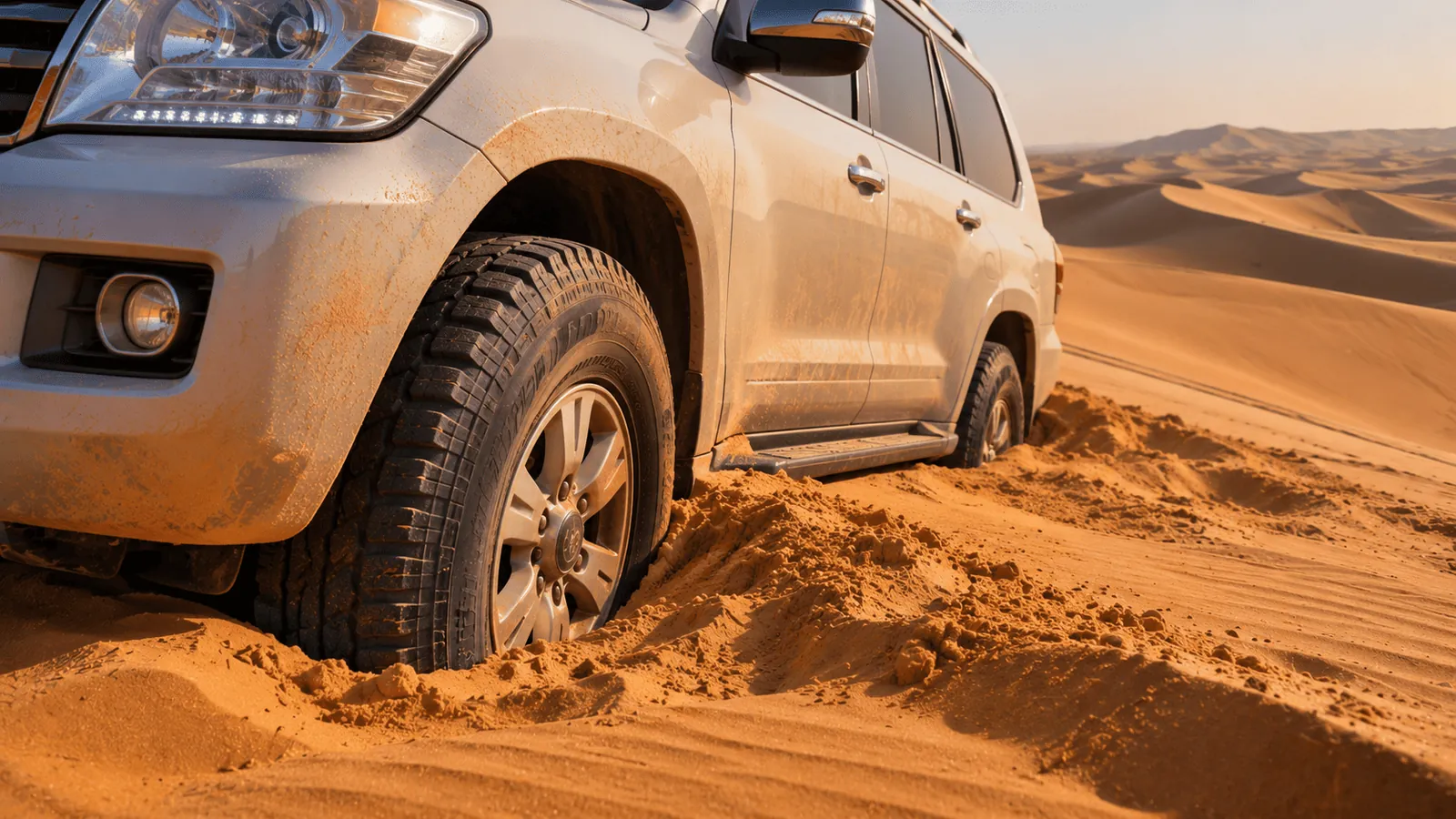
Most drivers assume they get stuck in the dunes because their 4x4 lacks power. Often, the real problem is much simpler: they entered soft sand with road pressure still in the tyres.
On tarmac, higher pressure helps a tyre carry load, maintain stability and control heat. In sand, that same firm tyre creates a shorter footprint and cuts downward instead of floating across the surface. The driver presses harder, the wheels spin faster, and the vehicle digs itself into four holes.
Choosing the right tyre pressure for dune bashing is therefore not a minor setup detail. It changes traction, steering response, ride comfort and the chance of completing the drive without recovery.
But there is another mistake at the opposite end: reducing pressure too far. That can make the tyre separate from the wheel, damage the sidewall or reduce steering control. The correct approach is measured, vehicle-specific and supported by the right equipment.
Why Lower Tyre Pressure Works in Sand
When air is released, the tyre flexes and its contact patch becomes longer. This spreads the vehicle’s weight over a larger area, helping it stay closer to the surface instead of sinking.
Think of the difference between walking on sand in narrow shoes and wide snowshoes. The total weight is unchanged, but the wider footprint distributes it more effectively.
Lower pressure also allows the tyre to absorb small dune ripples rather than bouncing across them. That can improve comfort and help the vehicle maintain smoother momentum.
However, deflating tyres for sand driving does not create unlimited grip. Aggressive throttle can still cause wheelspin, and sharp steering can push a flexible sidewall away from the rim. Airing down works best with smooth inputs and controlled speed.
The Mistake: Copying One PSI Number for Every 4x4
Drivers often ask for the single correct dune bashing tyre pressure Dubai conditions require. There is no universal number.
Published guidance varies. Jeep UAE gives approximately 15–20 PSI as a broad sand-driving reference, while BFGoodrich MENA advises reducing pressure gradually and recommends not going below 20 PSI in its general guidance. The difference is exactly why an online number should not replace advice for your vehicle and tyre.
The suitable starting point depends on:
- Vehicle weight and load
- Tyre size, construction and sidewall stiffness
- Wheel width and whether beadlocks are fitted
- Sand softness and temperature
- Driving speed and route difficulty
- Driver experience
A lightly loaded Wrangler on flexible all-terrain tyres may behave differently from a fully equipped Nissan Patrol on heavy tyres and wide wheels. Use the vehicle and tyre manufacturers’ guidance, then make small adjustments with an experienced off-road driver or instructor.
Tyre Pressure for Desert Driving: Adjust Gradually
A safer method is to begin conservatively, check the footprint and reduce pressure in small, equal steps. BFGoodrich MENA recommends adjustments in 5 PSI stages while observing traction.
Use an accurate gauge rather than estimating by eye. All four tyres should normally be set consistently unless a qualified expert recommends otherwise for a specific situation.
After each adjustment, ask:
- Is the vehicle floating better or still digging?
- Does steering remain predictable?
- Are the sidewalls folding excessively?
- Is the tyre staying securely seated on the rim?
- Has wheelspin reduced?
The correct tyre pressure for desert driving is the lowest safe pressure that provides the required flotation while retaining tyre security and control. It is not the lowest number your deflator can reach.
Why Low Pressure Requires Lower Speed
A deflated tyre generates more sidewall movement and heat. At higher speed, that flex can damage the tyre or make handling unstable. Sudden steering also increases the chance of bead loss because the sidewall is already under greater deformation.
When aired down:
- Keep speed appropriate for the reduced pressure
- Accelerate, steer and brake smoothly
- Avoid sharp turns when the vehicle is heavily loaded
- Watch for sidewall folding or sand entering the bead
- Stop if the steering suddenly changes or vibration appears
Never return to normal road speed at dune pressure. Ford UAE advises checking and restoring tyre pressures before returning to the road because underinflation on tarmac reduces safety, tyre life and fuel efficiency.
The Equipment You Need Before Airing Down
Managing pressure correctly requires more than a cheap gauge. Essential Off-road accessories Dubai drivers should carry include:
- A controlled tyre deflator
- An accurate pressure gauge
- A compressor suitable for the tyre size
- A tyre repair kit
- A full-size spare in usable condition
- Traction boards and a shovel
- Rated recovery equipment and secure recovery points
The compressor is non-negotiable. Check airflow, duty cycle, hose length and thermal protection. A small unit designed for passenger-car tyres may overheat before reinflating four large 4x4 tyres.
These are also among the most important 4x4 accessories UAE desert drivers can buy. Decorative upgrades can wait; pressure management and recovery readiness cannot.
What to Do When the Vehicle Starts Digging
If forward movement slows and the wheels begin spinning, do not keep accelerating. More throttle usually digs the tyres deeper and makes recovery harder.
Ease off, stop before the chassis settles onto the sand and assess the situation. Clear sand from the direction of travel, check tyre pressure and use traction boards if appropriate. If another vehicle is needed, use rated recovery points and suitable equipment under the direction of someone experienced.
Do not attach a recovery rope to a tow ball or an unrated tie-down point. Keep bystanders outside the recovery zone.
Build the Habit, Not Just the Vehicle
Good dune driving begins before the first dune. Check tyre condition, pressure tools, spare tyre, compressor and recovery equipment at the meeting point. Agree on communications and travel with another capable vehicle.
Car Space helps UAE drivers select compatible pressure-management and recovery equipment as part of a complete off-road build. Its guidance focuses on the vehicle, tyre setup, terrain and real driving needs not simply selling another accessory.
The biggest tyre-pressure mistake is treating one PSI figure as a rule. Start from reliable guidance, adjust gradually, drive smoothly and reinflate before tarmac. That is how the correct tyre pressure for dune bashing helps you float across sand instead of digging into it.________________________________________________________________________
Frequently Asked Questions
What is the best tyre pressure for dune bashing?
What dune bashing tyre pressure Dubai drivers commonly use?
Is deflating tyres for sand driving safe?
Which off-road accessories Dubai drivers need for tyre pressure management?
What are the most important 4x4 accessories UAE desert drivers should buy first?
Need Help?
Talk to a Car Space Expert
Get personalised advice on buying, selling, inspecting or building your car in the UAE.
Book a Free ConsultationCar Space Services
More Articles
Why Your 4x4 Overheats While Off-Roading and the Cooling Upgrades That Fix It
6 min read · Off-Road
What Recovery Gear to Carry to Avoid Getting Stuck in the UAE Desert
7 min read · Off-Road
Why Your Snorkel Isn’t Protecting Your Engine the Way You Think
8 min read · Off-Road
How Diff Breathers Save Your 4x4 in UAE Wadi Crossings
7 min read · Off-Road