
Why Your Off-Road Tyres Wear Out So Fast on Dubai Highways
Discover why off-road tyres wear quickly on Dubai highways and how pressure, alignment, rotation and maintenance can extend tyre life.
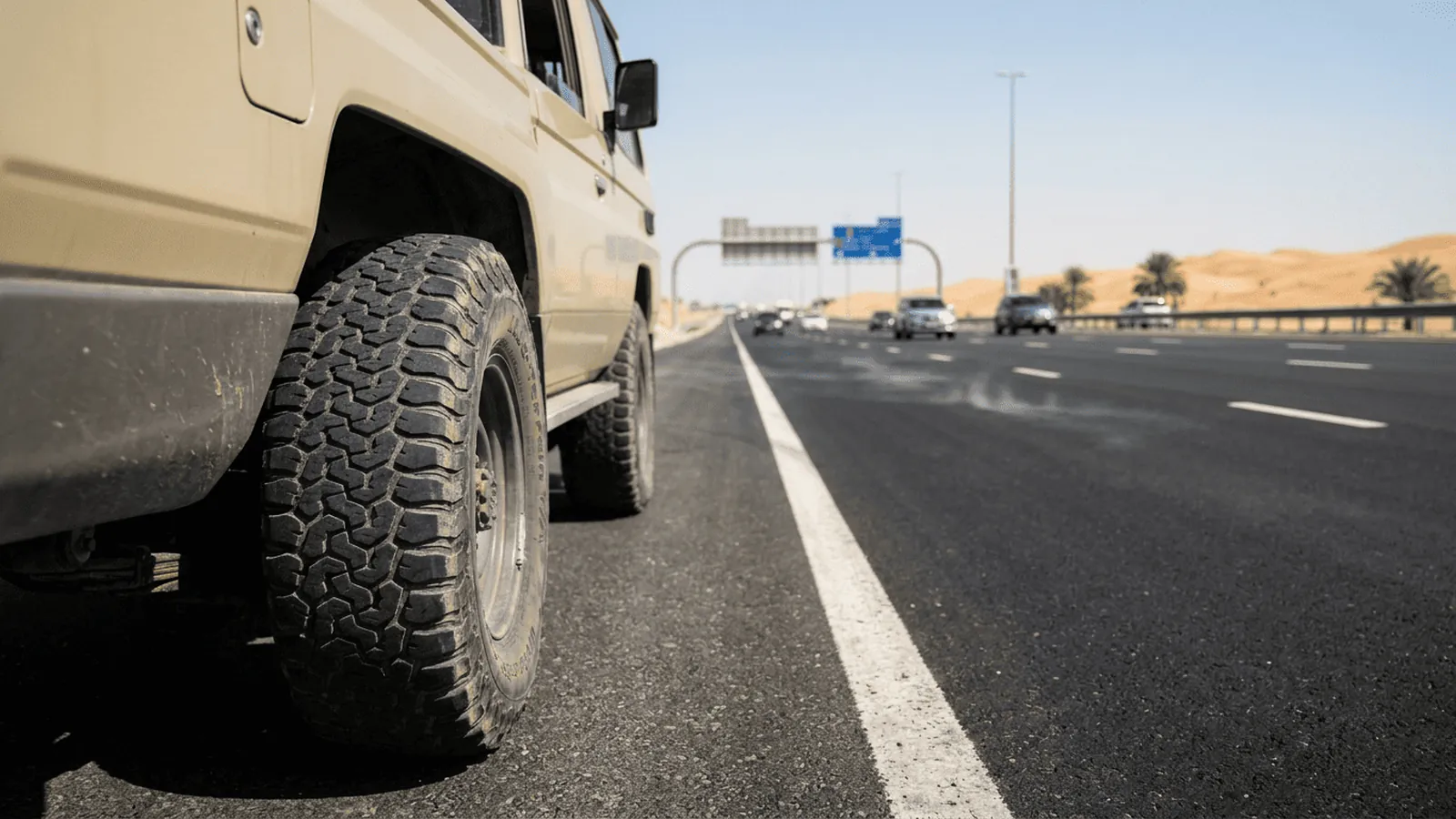
Off-road tyres look ready for punishment, so it is frustrating when an expensive set becomes noisy, uneven or noticeably worn after regular highway driving. Dubai’s heat often gets blamed, but rapid off road tyre wear usually comes from several factors working together: tread design, pressure, speed, alignment, rotation, vehicle weight and driving habits.
A tyre built for sand, rock and loose terrain has different priorities from a highway-focused tyre. That does not mean it cannot be driven on the road. It means the tyre and vehicle need to be selected, set up and maintained for the way they are actually used.
If your 4x4 spends five days commuting every weekend in the desert, the solution may not be the most aggressive tread available. It may be a better-matched all-terrain tyre and a more disciplined maintenance routine.
Why Off-Road Tyres Behave Differently on Highways
Off-road tread blocks are often larger and more widely spaced so they can clear loose material and find grip away from paved roads. On a highway, those blocks repeatedly contact a hard, hot surface at speed. They can move slightly under load, creating heat and uneven wear if pressure, alignment or damping is wrong.
More aggressive tyres may also use heavier construction and deeper tread. This can increase road noise and rolling resistance. A mud-terrain tyre chosen mainly for appearance may therefore be a poor match for a daily-driven SUV that rarely leaves sand tracks and graded trails.
Quality off-road tyres on highway routes can perform reliably when their load rating, speed rating, pressure and application are correct. The mistake is expecting every off-road pattern to provide touring-tyre comfort and life.
1. You Are Driving at Desert Pressure on the Road
Lowering tyre pressure increases the contact area on soft sand and helps a 4x4 stay on top of the surface. That same pressure is unsuitable for sustained highway driving.
An underinflated tyre flexes more with every rotation. This builds heat, affects handling and can accelerate shoulder wear or internal damage. After leaving the desert, reinflate all four tyres before joining high-speed traffic. Do not delay the job until the next fuel stop if it requires driving at highway speed.
Check road pressure when the tyres are cold, using a dependable gauge. Begin with the vehicle manufacturer’s guidance. If the vehicle uses non-standard tyre sizes, carries permanent accessories or operates at different axle loads, ask the tyre manufacturer or a qualified specialist for an appropriate recommendation.
Never release air simply because the reading is higher after a highway journey. Pressure naturally rises as a tyre warms, and the specified road figure is normally a cold-pressure reference.
2. Pressure Is Too High for the Load and Tyre
Overinflation is not the answer to heat. Excess pressure can reduce ride comfort, concentrate wear toward the centre of the tread and make the tyre more vulnerable to impact damage.
The maximum figure on the sidewall is not automatically the everyday target. Pressure should reflect the vehicle, tyre size and actual load. Check it at least monthly, before long journeys and after any suspected leak.
If the vehicle is heavily loaded for touring, the correct pressure may differ from an unladen commute. Avoid guessing or copying another driver’s setup simply because both vehicles are Patrols or Land Cruisers.
3. Your Wheel Alignment Is Scrubbing the Tread
Highway kilometres expose alignment problems quickly. Incorrect toe can make the tyres scrub slightly sideways rather than roll cleanly. Camber errors can wear one shoulder, while unsuitable caster may affect stability and steering return.
A suspension lift, impact with a kerb, hard landing, worn bush or bent component can change alignment. Large tyres may make the resulting pattern more obvious.
Look for these clues:
- One inner or outer edge wearing faster: check alignment and suspension condition.
- Feathered tread blocks: toe may be incorrect.
- Vehicle pulling or steering wheel sitting off-centre: request an alignment inspection.
- Cupped or scalloped patches: investigate balance, shocks and worn suspension parts.
Correcting alignment stops the cause from becoming worse, but it cannot restore rubber that has already worn away.
4. You Skipped 4x4 Tyre Rotation
Tyres do not work equally at every position. Front tyres handle steering and much of the braking load, while driven wheels deal with acceleration forces. Vehicle weight distribution and suspension geometry also influence wear.
Regular 4x4 tyre rotation moves tyres between positions so the set wears more evenly. Follow the vehicle and tyre manufacturer’s schedule and rotate earlier if an irregular pattern begins. Many manufacturers use a general interval in the region of 8,000–12,000 kilometres, but the correct schedule for your vehicle takes priority.
Rotation patterns vary. Directional tyres normally remain on the same side unless they are removed and remounted. Different front and rear sizes may limit rotation options. A five-tyre rotation can be useful when the spare is a matching full-size wheel and the manufacturer permits it.
Record each rotation. This helps diagnose recurring wear and may be required for tyre-warranty conditions.
5. The Tyre Is Too Aggressive for Your Real Use
Choosing between highway-terrain, all-terrain and mud-terrain patterns should begin with how the vehicle spends most of its kilometres.
For many UAE owners, a good all-terrain tyre provides a practical balance for highway commuting, desert access, gravel and touring. More aggressive mud-terrain designs can offer advantages in specific loose or rocky conditions but may produce more noise and faster or less even road wear.
All-terrain tyre wear still depends on compound, tread design, vehicle weight and maintenance. The “A/T” label alone does not guarantee long life. Compare the manufacturer’s intended use, load and speed ratings, warranty conditions and replacement availability in the UAE.
6. Heat, Speed and Driving Style Are Working Together
Dubai’s summer road temperatures add to the heat generated inside a rolling tyre. Speed, low pressure, heavy loads and aggressive inputs increase that demand further.
Hard acceleration can scrub the driven tyres. Late braking loads the fronts, while fast cornering works the outer shoulders. Smooth steering, braking and throttle inputs reduce unnecessary stress without making normal highway driving impractical.
High speed can also intensify existing problems. A tyre that is slightly underinflated or overloaded may build far more heat during a long motorway run than during a short city journey. Stay within the tyre’s rating and the vehicle’s legal load limits.
7. Worn Shocks or Poor Suspension Setup Are Cupping the Tyres
A tyre cannot wear evenly if it is not controlled against the road. Weak dampers can allow repeated bouncing, while unsuitable lift components or incorrect geometry may create irregular contact.
Cupping often appears as alternating high and low patches around the tread. It may create humming, vibration or increasing road noise. Balancing can help when imbalance is the cause, but worn shocks, bushes, bearings or other suspension faults must be repaired.
This is why replacing tyres without inspecting the vehicle can become expensive. The new set may develop the same pattern.
A Quick Off-Road Tyre Wear Diagnosis Guide
| Wear pattern | Likely areas to inspect |
|---|---|
| Both shoulders | Low pressure, overload or hard cornering |
| Centre tread | Excessive pressure for the application |
| One edge | Alignment or worn suspension component |
| Feathering | Incorrect toe setting |
| Cupping or scalloping | Balance, dampers, bearings or suspension wear |
| Flat spot | Hard braking, skidding or long stationary storage |
Treat this table as a starting point, not a final diagnosis. Internal damage, separation or impact injury may not be visible from tread wear alone. Have vibration, bulges, cuts or pressure loss inspected promptly.
How to Extend Tyre Life in Dubai
Build these checks into your 4x4 routine:
- 1Check cold road pressure monthly and before long journeys.
- 2Reinstate safe road pressure immediately after sand driving.
- 3Inspect tread and sidewalls after every off-road trip.
- 4Follow the correct 4x4 tyre rotation schedule.
- 5Balance the wheels when vibration appears or weights are lost.
- 6Check alignment after impacts, suspension work or unusual wear.
- 7Inspect shocks, bushes, bearings and steering components.
- 8Keep within vehicle and tyre load limits.
- 9Use smooth inputs and avoid unnecessary high-speed heat buildup.
- 10Measure tread depth across the inner, centre and outer sections.
Do not judge a tyre only by the outside shoulder, which is easy to see. Inner-edge wear can become severe while remaining hidden beneath the vehicle.
Choose Tyres and Supporting Parts as One System
Car Space helps UAE drivers compare tyres, wheels, suspension and related Off-road parts Dubai owners need for their actual mix of highway and desert use. The right recommendation should consider vehicle weight, wheel size, suspension changes, regular load and expected terrain.
If you are searching for a Maintenance check near me, choose a workshop that measures pressures and tread depth, inspects the complete suspension and provides the alignment readings. A quick visual check is not enough when a valuable tyre set is wearing unevenly.
The longest-lasting tyre is not necessarily the hardest or least aggressive option. It is the tyre that suits the job and is kept at the correct pressure, alignment and rotation schedule. Fix the cause early and your 4x4 will be quieter, safer and less expensive to run on Dubai highways._________________________________________________________________________
Frequently Asked Questions
Why do off-road tyres wear faster on Dubai highways?
Are off-road tyres safe for highway driving?
How often should I rotate tyres on a 4x4?
How can I reduce all-terrain tyre wear?
Where can I get off-road tyres and a maintenance check in Dubai?
Need Help?
Talk to a Car Space Expert
Get personalised advice on buying, selling, inspecting or building your car in the UAE.
Book a Free ConsultationCar Space Services
More Articles
Why Your 4x4 Overheats While Off-Roading and the Cooling Upgrades That Fix It
6 min read · Off-Road
The Tyre Pressure Mistake That Gets You Stuck Dune Bashing in Dubai
6 min read · Off-Road
What Recovery Gear to Carry to Avoid Getting Stuck in the UAE Desert
7 min read · Off-Road
Why Your Snorkel Isn’t Protecting Your Engine the Way You Think
8 min read · Off-Road