
Why Cheap LED Light Bars Fail in UAE Heat Within One Season
Learn why cheap LED light bars fail in UAE heat and how to choose a durable off-road LED light bar with proper cooling, sealing and wiring.
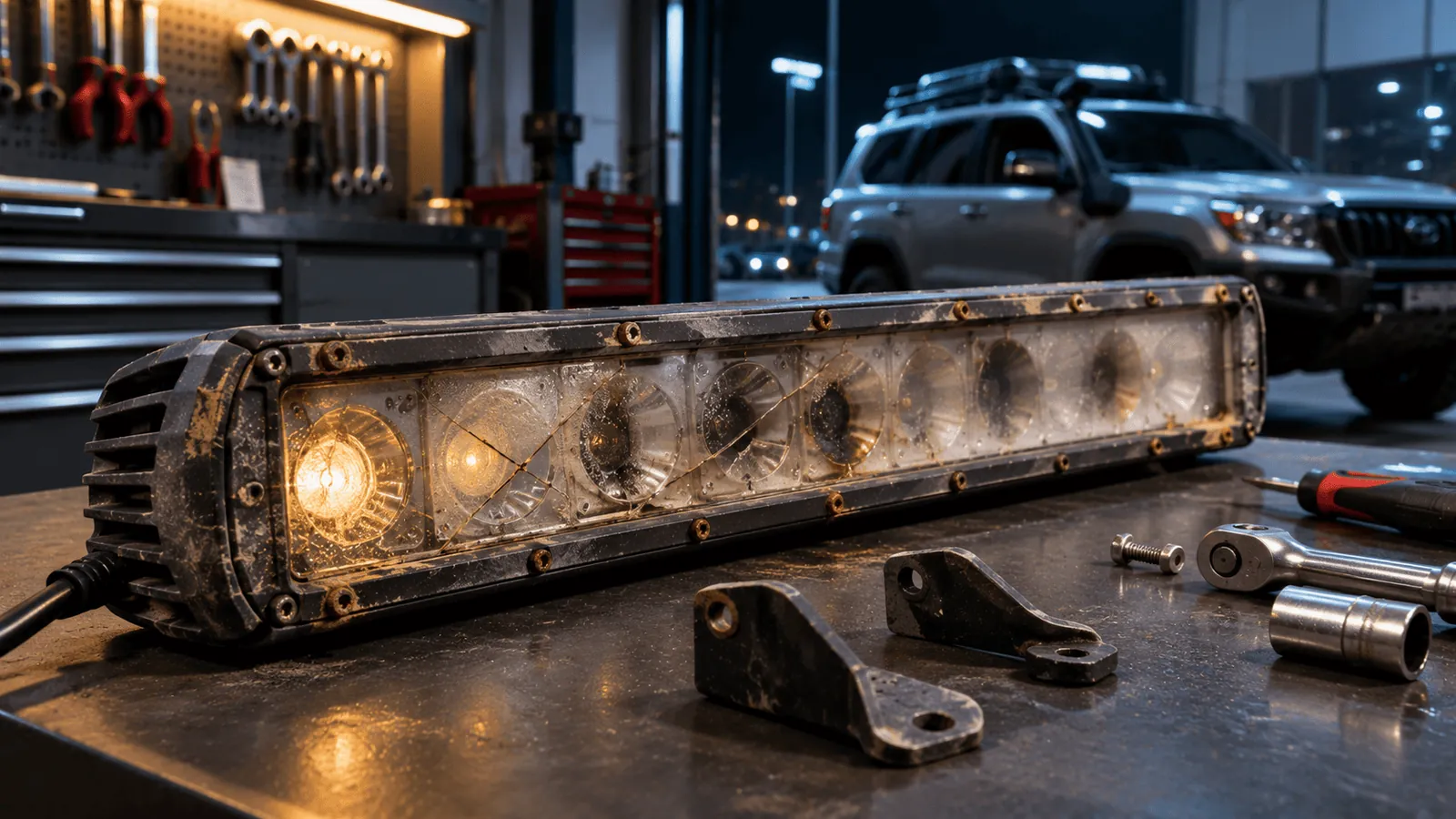
A new light bar can look impressive during its first night drive. Six months later, part of the row is dim, moisture has appeared behind the lens or the whole unit flickers after warming up. In the UAE, these failures are often blamed on “bad LEDs,” but the LED chips are only one part of the system.
A reliable LED light bar UAE drivers can use in extreme conditions needs to move heat away from the chips, regulate electrical current, keep dust and water out, survive vibration and protect the vehicle’s wiring. Cheap products frequently compromise the parts that are not visible in a product photo.
That is why two bars with the same size and claimed wattage can have very different service lives.
LEDs Create Heat Even Though the Light Looks Cool
LEDs are more efficient than many traditional light sources, but they still create heat. That heat builds at the junction inside each LED and must travel through the circuit board into the housing and surrounding air.
In a well-designed light, the LED board has an effective thermal path to an aluminium housing with properly sized cooling fins. Temperature monitoring may reduce output before internal components are damaged. The light can therefore remain stable during extended use.
In a poor design, thin housings, limited fin area, weak board contact or inadequate thermal material trap heat around the chips and driver electronics. Dubai’s high ambient temperature reduces the difference between the hot light and the surrounding air, making heat rejection harder. The result may be colour shift, reduced brightness, driver failure or permanent LED damage.
This is the basic mechanism behind many cases of LED light bar heat failure.
1. The Housing Looks Strong but Cannot Dissipate Heat
Weight alone does not prove quality. A housing needs suitable material, fin design, internal contact and airflow around it. Decorative fins that are too shallow or blocked by the mounting position may provide little cooling.
Installation also matters. A light mounted tightly against a solid panel or hidden behind a grille may receive less airflow than its designer intended. Sand, mud and dust packed between the fins create an insulating layer.
Inspect and clean the rear of the bar regularly. Never cover a hot operating light unless its manufacturer specifically allows it, and do not paint or coat the heat-sink surface in a way that can reduce thermal performance.
2. Cheap Driver Electronics Cannot Handle UAE Conditions
LED chips require controlled current. The electronic driver converts the vehicle’s changing supply voltage into the current the LEDs need. That driver may face heat, alternator voltage changes, switching spikes and incorrect polarity during installation.
A quality off-road LED light bar may include over-voltage, under-voltage, reverse-polarity and thermal protection. Less developed products may use undersized components or weak solder joints. They can work on a bench for a short test but fail after repeated hot-cold cycles and vibration.
Typical driver-related symptoms include:
- Flickering after the light warms up
- A bar that works cold but switches off during long use
- Several LEDs failing together in one section
- Brightness that falls rapidly despite stable vehicle voltage
- Radio noise or interference with onboard electronics
Interference is not merely annoying. Reputable automotive lighting may carry recognised electromagnetic-compatibility testing, such as ECE R10, to show that it is designed not to disrupt or be disrupted by nearby electronics.
3. An IP Claim Is Not the Whole Sealing Story
An IP rating describes protection against specific dust and water test conditions. It does not automatically prove long-term quality, and a printed claim is meaningful only when it is credible and supported.
Light bars repeatedly heat up and cool down. The air inside expands and contracts, creating pressure changes. A good design may use dependable seals, waterproof connectors and a pressure-equalising vent. Poor seals can draw humid air inside as the unit cools.
Once moisture reaches the circuit board, corrosion can begin. Condensation, cloudy reflectors, staining around the lens and intermittent operation are warning signs.
When comparing Off-road accessories Dubai suppliers offer, ask for the verified ingress rating, connector type, vent design, warranty and exclusions. “Waterproof” by itself is not a useful specification.
4. The Lens and Reflector Cannot Survive Heat and UV
The lens is exposed to sunlight, sand, pressure washing and flying stones. Low-grade plastic can yellow, haze or develop fine cracks, reducing the amount of useful light even when the LEDs still work.
The internal reflector or optic is equally important. A cheap bar may produce a bright patch close to the vehicle but scatter glare everywhere else. This can make the raw lumen figure look impressive without improving visibility where the driver needs it.
Look for UV-resistant, impact-resistant lens material and a defined beam pattern. Good optics place light on the terrain; they do not simply make the lamp appear bright from the front.
5. The Wiring Harness Is Undersized or Poorly Installed
Some light-bar failures begin outside the housing. Thin wire, weak relays, cheap switches, exposed joins and poor grounds create voltage drop and heat. A high-current bar connected directly through an underrated dashboard switch can damage the switch or wiring.
A proper installation should use:
- Cable sized for the current draw and total run length
- A correctly rated fuse positioned close to the power source
- An appropriate relay when the switch cannot carry the load
- Weather-resistant connectors and sealed joins
- Abrasion protection around metal edges and moving components
- A clean, secure ground point
- Routing away from exhaust heat and sharp surfaces
Do not fit a larger fuse to stop repeated fuse failures. A blowing fuse indicates a fault, overload or incorrect circuit design that needs diagnosis.
6. Vibration Breaks What Heat Has Already Weakened
Dune driving and corrugated tracks subject the bar, brackets and internal connections to constant movement. Heat cycling expands and contracts materials; vibration then works on solder joints, connectors and mounting points.
An inexpensive bracket may allow the bar to shake, causing beam movement and fatigue. Loose fasteners can damage threads or the vehicle mounting surface. Quality lights are commonly tested for vibration and mechanical shock, while the vehicle-specific mounting system should support the bar without blocking cooling.
Inspect brackets and fasteners after the first trips and at regular service intervals. Follow the manufacturer’s torque instructions rather than overtightening small hardware.
7. Claimed Lumens Do Not Equal Usable Light
Many listings promote a calculated “raw lumen” figure based on the maximum output of individual LED chips. That number may not account for heat, optical losses or how the driver limits current.
Useful comparisons include measured lumens, lux at a stated distance, beam pattern, current draw and thermal behaviour after the light has been operating. A bar that starts extremely bright and quickly reduces output may be less useful than a lower-rated product that remains stable.
The best LED light bar for 4x4 use is not automatically the one with the highest advertised number. It is the one that creates the right beam, survives the environment and matches the vehicle’s electrical capacity.
Spot, Flood or Combination Beam?
Beam choice should match the terrain:
- A spot or long-range beam reaches farther on open tracks.
- A flood or wide beam improves close-range peripheral visibility.
- A combination beam balances distance and spread.
- Diffused work lighting suits camps, reversing or low-speed task areas.
Mounting height changes how the beam behaves. Roof-mounted bars can create bonnet glare, illuminate dust in front of the windscreen and increase wind noise. A lower bumper or grille position may work better for some applications.
Professional aiming matters. More light pointed into the wrong area can reduce visibility by reflecting from dust and creating bright foreground glare.
How to Choose an LED Light Bar for UAE Conditions
Before buying, check the following:
- 1Verified temperature range and thermal-management design
- 2Aluminium or proven thermally conductive housing construction
- 3Credible dust and water protection rating
- 4UV- and impact-resistant lens
- 5Pressure venting or a documented moisture-control system
- 6Over-voltage, under-voltage and reverse-polarity protection
- 7EMC testing appropriate for automotive use
- 8Measured beam data rather than raw lumens alone
- 9Current draw, operating voltage and included wiring specifications
- 10Warranty support from a traceable manufacturer and UAE seller
The bar must also fit the vehicle without blocking cooling airflow, sensors or cameras. Confirm road-use restrictions before installation because many auxiliary driving and work lights are marked for off-road use only.
Signs Your Light Bar Is Failing
Arrange an inspection if you notice:
- Condensation that does not clear normally
- Yellowing or cracks in the lens
- Flickering, dim sections or delayed start-up
- Discoloured wiring, hot connectors or a burning smell
- Blown fuses or melted switches
- Radio interference that began after installation
- Loose brackets or a beam that shakes on the road
- Brightness dropping significantly during continuous use
Disconnect a suspect circuit if there are signs of overheating, melted insulation or repeated fuse failure. Electrical faults can damage more than the light bar.
Choose the System, Not Just the Bar
Car Space helps UAE owners compare lighting, brackets, wiring and related Off-road accessories Dubai drivers need for complete vehicle builds. A good recommendation should consider beam use, mounting location, current draw, electrical capacity and whether the product is approved for its intended use.
When choosing a Car accessories shop Dubai customers should look beyond the display-wall brightness test. Ask how the product manages heat, what its ingress and EMC ratings mean, whether replacement parts are available and who is responsible for installation warranty.
A cheap bar becomes expensive when it fails during a trip, damages a switch or needs replacement every season. A properly engineered light bar, selected for UAE conditions and professionally installed, offers consistent output, safer wiring and dependable support after purchase.
Frequently Asked Questions
Why do cheap LED light bars fail in UAE heat?
What should I look for in an off-road LED light bar?
What is the best LED light bar for a 4x4?
Can I use an off-road light bar on public roads in Dubai?
Where can I buy a reliable LED light bar in Dubai?
Need Help?
Talk to a Car Space Expert
Get personalised advice on buying, selling, inspecting or building your car in the UAE.
Book a Free ConsultationCar Space Services
More Articles
Why Your 4x4 Overheats While Off-Roading and the Cooling Upgrades That Fix It
6 min read · Off-Road
The Tyre Pressure Mistake That Gets You Stuck Dune Bashing in Dubai
6 min read · Off-Road
What Recovery Gear to Carry to Avoid Getting Stuck in the UAE Desert
7 min read · Off-Road
Why Your Snorkel Isn’t Protecting Your Engine the Way You Think
8 min read · Off-Road